
What is a Microgrid?
A microgrid is a localised energy system that can supply electricity to a defined group of loads from local generation, energy storage, and intelligent control, when interconnected with or isolated from the main grid. Microgrids have grown in importance as organizations seek higher resilience, renewable integration, and greater control over their energy systems. Understanding how a microgrid works offers insight into why it is becoming a core component of modern electricity infrastructure.
Microgrids matter because they create a controllable and flexible energy environment, enabling facilities, communities, and industrial sites to generate, store, and manage energy internally. According to the National Renewable Energy Laboratory, microgrids provide resilience and reliability by continuing service to critical loads during grid disturbance events or outages. That again renders these systems of value in regions affected by extreme weather or rapidly rising demands for electricity.
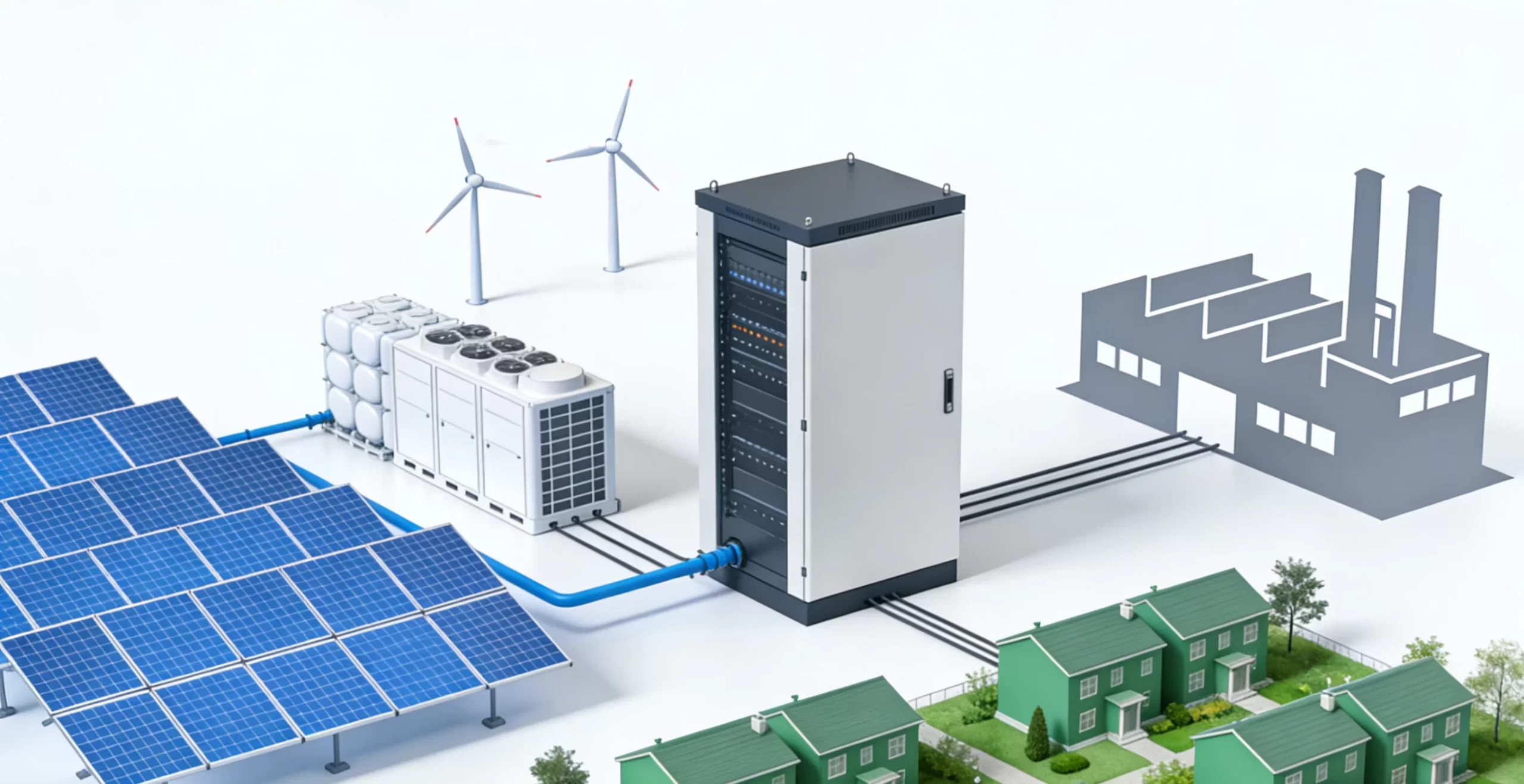
How Microgrids Work
Microgrids operate through the coordination of distributed energy resources, including solar generation, battery storage, and flexible loads. In grid-connected operation, a microgrid exchanges power with the utility network, while in islanded operation, it becomes responsible for its own voltage and frequency maintenance. This dual operational mode is at the very heart of microgrid value as such because it preserves energy availability in emergencies.
Core Elements of a Microgrid
The typical components of a microgrid include, but are not limited to, a variety of integrated parts that collectively can ensure reliable and efficient operation.
Generation Sources
These include on-site generation resources like photovoltaic arrays, combined heat and power units, small wind systems, and backup generators that provide a means for local production capacity and support energy autonomy.
Energy storage
The storage systems balance supply and demand. The batteries capture excess energy during high solar output or low consumption, while discharging when the loads rise or renewable output declines. Storage also stabilizes rapid fluctuations during islanded operation.
Loads and Internal Distribution
A microgrid aggregates its loads into a unified network: buildings, industrial processes, lighting, or electric vehicle charging. The internal distribution network guarantees coordinated energy flow, managed by control algorithms.
Energy Management for Microgrid
Energy management has a central role in allowing microgrids to maintain stability, efficiency, and cost-effectiveness. The research published in the Journal of Modern Power Systems and Clean Energy provides an insight into the generally acknowledged overview of layers for microgrid control and energy management strategies. These strategies handle not only operational stability but also economic optimization.
Control Layers in Modern Microgrids
The general architecture of microgrid controls usually consists of three coordinated layers of:
Primary Control
Primary control fulfills rapid adjustments in voltage and frequency. It assures immediate compensation in case of fast changes in load or generation through droop control techniques or inverter responses.
Secondary Control
Secondary control returns systems values to nominal set-points. In the event of a disturbance, primary control takes over and stabilizes the system, while secondary control fine-tunes it for continued performance.
Tertiary Control
This layer controls the scheduling of power exchange and optimization. It decides how much energy to buy or sell when grid-connected and how to minimize the use of fuel or maximize renewable penetration.
The Role of Energy Management System EMS
The Energy Management System coordinates forecasting, dispatch, and optimization. Foundational work by the Consortium for Electric Reliability Technology Solutions at the Lawrence Berkeley National Laboratory showed that an EMS enables a microgrid to function as a unified controllable entity from the perspective of the utility. Their research demonstrated how EMS platforms maintain stability when switching between grid-connected and islanded modes while optimizing cost and improving reliability.
This work remains indispensable for those factors that explain why energy management determines the operational success of smart microgrids.
Smart Microgrids and Advanced Capabilities
Basically, smart microgrids extend a traditional microgrid by adding sensors, communication networks, and real-time decision tools. Smart control achieves an adaptive response to the change in load patterns, variability of weather, and grid conditions. With better visibility and automated control, smart microgrids reduce operational risk and support long-term sustainability goals.
Benefits of Smart Microgrids
Smart microgrids offer a number of advantages including
- Improved reliability for mission-critical facilities
- Better integration of renewable energy
- Optimized usage of storage systems
- Reduced peak demand and operating costs
- Greater resilience in case of disasters
Those features make smart microgrids ideal for applications in hospitals, research campuses, airports, and industrial facilities.
Cases Showing Value of Microgrid
Microgrids have shown practical value in a variety of environments. The following two real-world cases highlight how microgrids assure reliability and continuity.
A microgrid with solar generation, battery storage, and an intelligent EMS was implemented at a research institution in the western United States. When the surrounding region was affected by wildfire-related grid outages, the microgrid maintained stable operation for laboratory buildings to support continuous research activities.
A hospital network implemented an onsite microgrid with combined heat and power units, along with automated switching controls. When there are severe winter storms that disrupt the regional grid, the microgrid has been able to keep all emergency and surgical departments fully powered, ensuring patient safety and care without interruption.
Types of Microgrids
Microgrids vary by application, geography and connectivity. The table below summarizes the most common categories.
| Type of Microgrid | Top Use Case | Key Features |
| Campus Microgrid | Universities research parks medical facilities | Large load diversity high resilience requirements |
| Community Microgrid | Neighborhoods towns residential districts | Shared renewables community level reliability |
| Industrial Microgrid | Factories data centers logistics hubs | Mission critical operations and high reliability |
| Remote Off Grid Microgrid | Islands rural zones mining regions | Fully independent operation no grid connection |
Why Microgrids Are Becoming Essential
As the adoption of renewables goes up and grid conditions become increasingly volatile, microgrids have represented a pragmatic path to resiliency and flexibility. They provide a level of control on a localized basis that lets organizations maintain adequate power even during large-scale disruptions. Research and field studies conducted by national laboratories continue to confirm that microgrids deliver strong reliability benefits and enable more efficient use of distributed energy resources.
Journal of Modern Power Systems and Clean Energy-Overview of control, integration, and energy management of microgrids further enforces these findings through the explanation of foundational control structures that enable stable operation.
Taken together, these sources illustrate why microgrids now are central to the evolution of modern energy systems.
Conclusion
Microgrids are a transformative shift in energy production, management, and delivery. Combining localized generation, storage, intelligent controls, and the ability to operate independently provide reliability and resilience beyond that of conventional centralized grids. As organizations look for practical ways to stabilize energy supply and integrate more renewable resources, microgrids offer a solid cornerstone for future-ready energy planning. And if your journey is toward better resilience and efficiency, understanding the role of microgrids will be a good place to start.