
Shipping Container Solar System: The Future of Off-Grid Energy Solutions
The solar system in a shipping container is no longer just for isolated experiments in remote locations. It has become an effective solution for delivering power in situations where conventional infrastructure is either too costly or just plain impossible to implement.
Essentially, the solar system in a shipping container is a system that combines solar panels, inverters, and batteries in a standard shipping container. The end result is an energy system that can be easily deployed anywhere, with minimal setup and start-up time required. Compared to conventional solar systems, this one is different, not just in technology, but in operation as well.
Why Shipping Container Solar Systems Are Gaining Momentum
The advantage of the solar container is that it is both mobile and reliable. Traditional solar systems have to be engineered to each site individually, have long installation periods, and can even involve permanent infrastructure. A container-based system eliminates most of this hassle.
Rapid Deployment in Harsh Environments
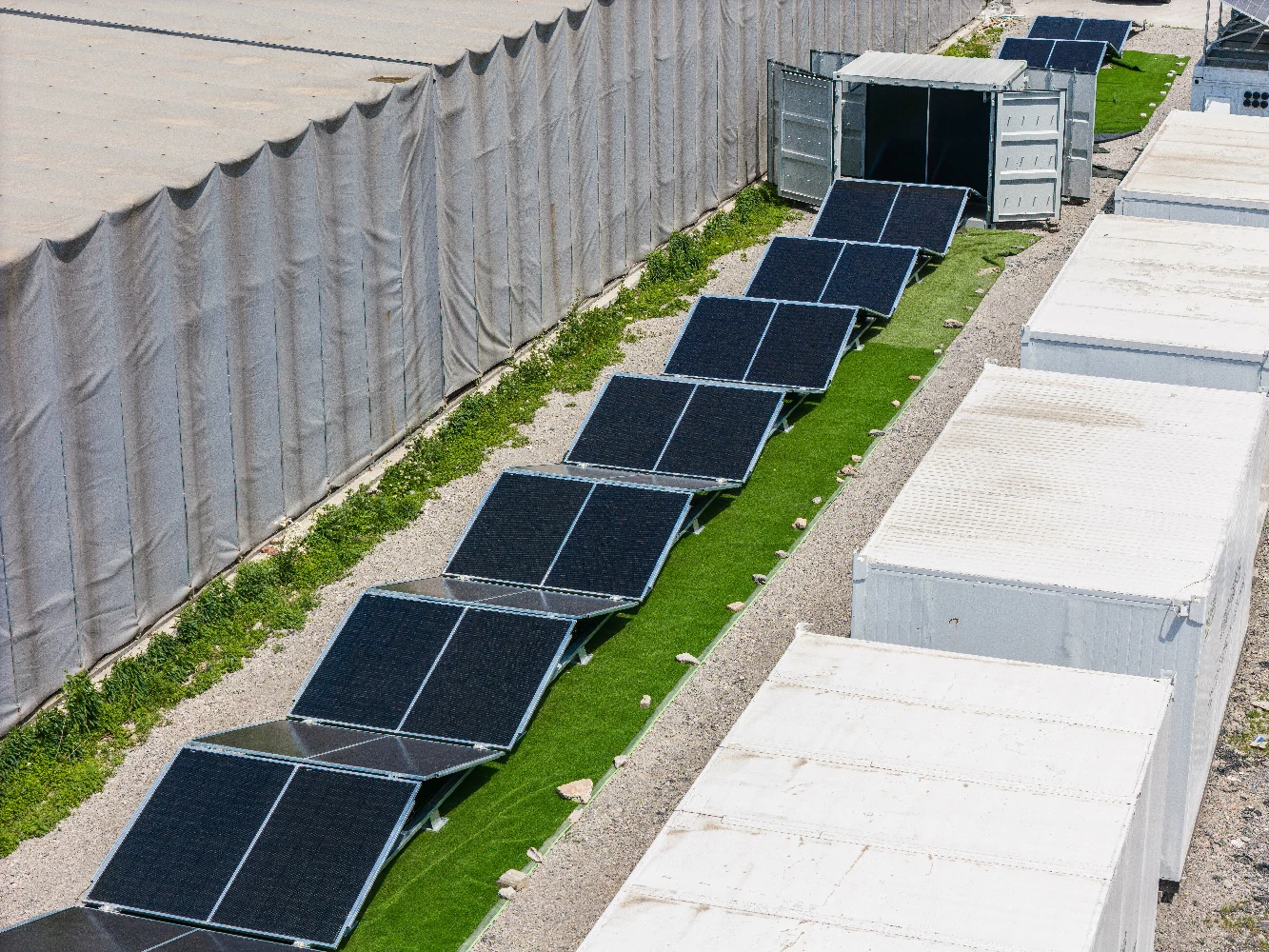
In many off-grid environments, time is of the essence. In disaster relief situations or for a mining camp, waiting months for grid extension is not possible. A solar container system can be deployed in as little as a week.
This is because the system is pre-engineered. All components have been pre-assembled and pre-tested to minimize deployment hassle. In many cases, deployment can involve as little as placing the container, opening the solar panels if they are contained within the container, and connection.
Modular and Scalable Design
The next advantage is scalability. A single container can provide energy for a small facility, and multiple containers can provide energy for larger facilities. This is a benefit because, as energy demands increase, this system can be adapted to meet the new demands.
The user does not have to invest heavily in this system. Instead, they can start with a small amount and add to it. This is especially useful for developing countries or if the energy demands are uncertain.
Core Components Inside a Solar Container
However, to understand what makes these systems tick and what makes them good at their job, it is important to take a look at their internal architecture. While different systems have different architectures, it appears that most of the shipping container-based solar systems have some key similarities.
Integrated Photovoltaic and Storage Systems
The photovoltaic array is the source of energy. However, the strength of this system is its integration of the storage system.
The study titled PV Hybrid System Data Visualisation – Off-Grid and Edge-of-Grid Photovoltaic Systems, published by International Energy Agency Photovoltaic Power Systems Programme (IEA-PVPS), shows that hybrid PV systems combining solar generation with storage significantly improve reliability and performance in off-grid environments.
This is in direct alignment with the design philosophy for solar containers: they are not just generators, but rather energy systems.
Smart Energy Management Systems
Solar containers also incorporate smart control technology to help manage energy flow. This technology helps determine when to store energy, how to distribute it, and when to bring in other sources, such as diesel generators, depending on requirements.
This automation eliminates the need for constant human intervention. In remote locations, this is not just desirable, it is necessary.
Key Use Cases Driving Adoption
The versatility of shipping container solar systems is also one of the main reasons for their widespread uptake. They are not limited to any particular field or application.
Remote and Rural Electrification
For places where electricity is out of reach, solar containers offer immediate and renewable energy. This would enable places such as schools and small communities to access electricity without having to wait for large-scale infrastructure development.
This would also eliminate long-term expenses and consequences for the environment, which would result from using diesel generators, which are normally used for such applications.
Industrial and Commercial Applications
Industries that are located in remote areas, such as mining, construction, and oil and gas exploration, require electricity. A solar container would offer them a flexible alternative that would also be movable.
Instead of having to set up large-scale infrastructure for operations that are only temporary, companies would be able to set up movable infrastructure that would be flexible enough to change according to their needs.
Emergency and Disaster Response
In the aftermath of natural disasters, the infrastructure of the electrical grid is frequently damaged or destroyed. The shipping container solar systems can be quickly deployed to restore vital services such as communication, medical care, and water services. The contained nature of the solar systems makes them particularly useful in chaotic environments.
Advantages Over Traditional Solar Installations
While both containerized and conventional solar systems utilize the same basic technology, there are significant differences in how they are deployed.
Reduced Installation Complexity
A conventional solar system requires considerable site preparation, which can be time-consuming and labor-intensive. With a solar container, this is no longer an issue.
Labor costs are reduced, as is the chance for human error, thus speeding up the overall process.
Portability and Reusability
A solar system, by definition, is stationary, whereas a solar container is not. This means that it can be moved as required, thus making it a reusable system rather than a one-time investment.
This can be particularly beneficial for temporary applications or changing needs.
Enhanced Protection and Durability
The fact that critical components are housed within a steel container offers considerable protection against adverse weather, theft, and environmental damage.
Challenges and Practical Considerations
However, it is important to note that despite their advantages, solar containers are not the ultimate solution. There are trade-offs that have to be made.
Space Constraints
The container format is also limited in terms of the amount of equipment that can be installed. While modularity is helpful in this regard, there is still only a limited amount of equipment that can be installed in each container.
For large-scale energy demands, it may even be necessary to use multiple containers or to use a hybrid system.
Initial Investment
Shipping container solar systems may have a higher cost than other solar systems. However, this is compensated for by their lower installation cost.
It is up to the decision-maker to make the appropriate choice in terms of cost of ownership versus cost of installation.
Logistics and Transportation
Shipping containers are designed to be transported. However, it is still important to note that there may be logistical issues that have to be addressed.
What the Future Looks Like
The trend in shipping containers for solar systems is also one of increased integration, efficiency, and access. It is likely that these types of systems will become even more powerful and efficient because of developments in battery technology and software.
There is also another trend at work. Energy production and delivery are changing from a traditional grid-based system to more decentralized and flexible types of energy delivery. In this context, the solar container is part of a larger trend.
Final Thoughts
A shipping container solar system is a solution to a very real problem: how to provide a reliable source of power quickly, efficiently, and where other solutions are not viable. The strength of a shipping container solar system is its ability to provide a reliable source of power while utilizing technology that is already tried and tested.
For those considering off-grid solutions for power generation, the key is to think beyond the actual generation of power. Think speed of deployment, the ability to adapt and change, and the ability to adapt to future changes. For many, a solar container will not only provide the answer to the question of power generation but make the entire process much easier.
When considering a solution to the problem of fuel generators, speed of deployment, and accessibility of the site, this is a solution that should be taken very seriously.